Ghost Is Still the King of Collabs - Even After Their Most Iconic Era Ended
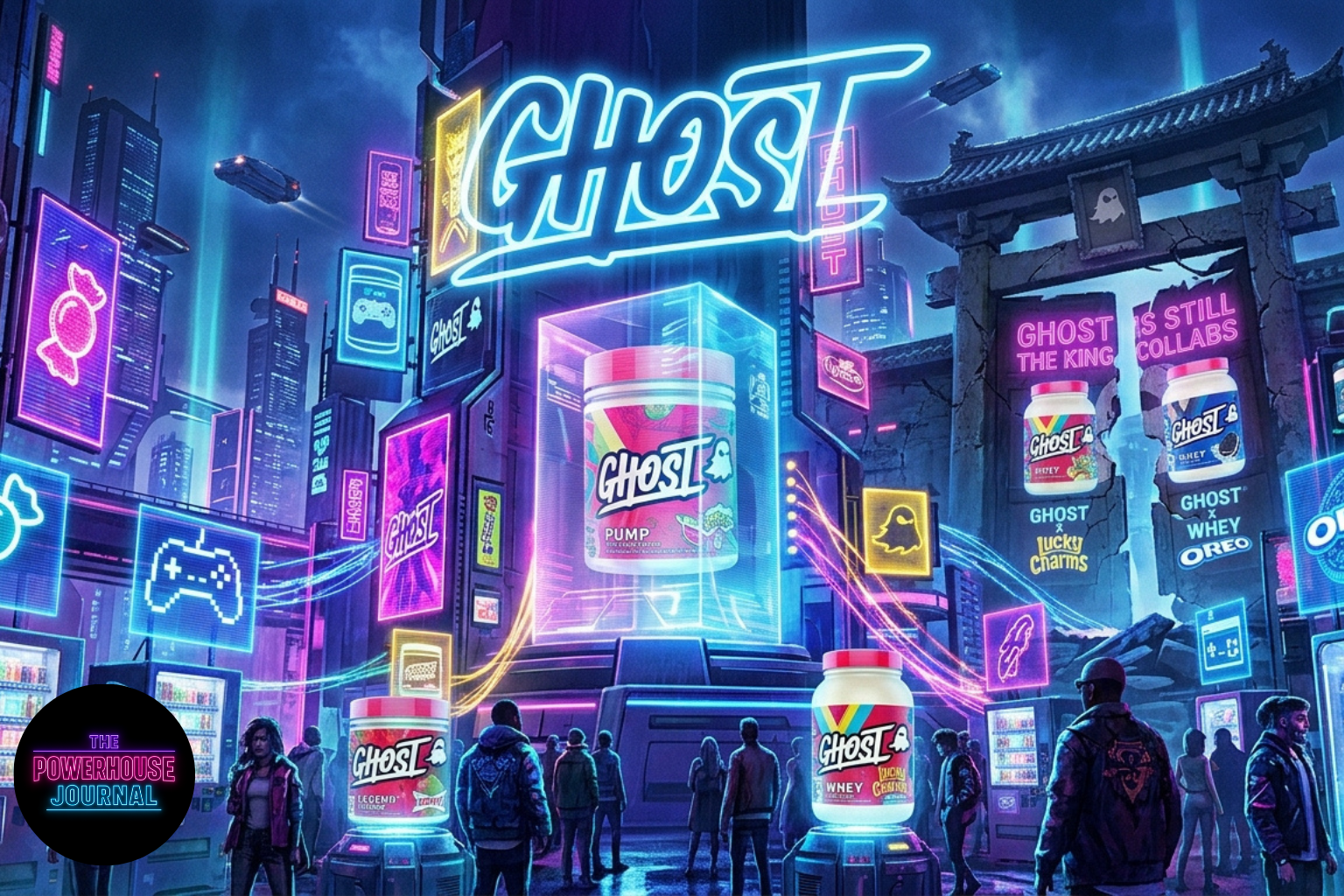
Ghost did not invent brand collaborations. It proved they could shake an entire industry, and supplements have been more creative ever since.
There was a time when a supplement collaboration felt unexpected.
Then Ghost turned it into an event.
Sour Patch Kids. Swedish Fish. Chips Ahoy. Oreo. Nutter Butter.
These were not small names borrowed for a little extra attention. They were brands consumers had grown up eating, suddenly reimagined as protein powders, pre-workouts and energy drinks.
Every new announcement felt bigger than a flavor launch because Ghost was not just selling another product. It was smashing two completely different worlds together and making the combination feel obvious once it existed.
That is why I have always called Ghost the “King of Collabs.”
Not because it was the only supplement company working with outside brands. Not because every collaboration was automatically perfect. Ghost earned that title because it showed the rest of the industry how powerful a collaboration could become when it was treated as more than a logo on a label.
Ghost Made Collaborations Industry-Shaking
Before collaborations became common across sports nutrition and energy drinks, most launches competed through the same familiar language: a new formula, a new flavor or a new piece of packaging.
Ghost changed the size of the conversation.
When the brand announced an officially licensed Sour Patch Kids or Oreo product, it immediately reached beyond the traditional supplement customer.
Someone did not need to understand protein filtration or pre-workout ingredients to understand why an Oreo protein sounded interesting. The collaboration created instant recognition, an emotional connection and curiosity before the consumer ever looked at the formula.
That first reaction mattered, but it was only the beginning.
Ghost understood that licensing a famous name creates attention, not automatic trust. If the product underneath the branding did not deliver an authentic flavor experience, the collaboration would feel like a cash grab.
The promise was not merely “cookies and cream.” It was Oreo.
It did not just need to taste vaguely like peanut butter. It had to remind people of Nutter Butter.
The standard was higher because the consumer already knew what the product was supposed to taste like.
Ghost accepted that challenge and, at its best, used the original product itself to strengthen the experience. Real cookie pieces in protein powder made the collaboration tangible. Flavor systems were not just inspired by the partner, they were built to recreate something recognizable.
The product, packaging and launch all told the same story.
That is the difference between borrowing attention and earning the collaboration.
It Was Bigger Than Nostalgia
Nostalgia was one of Ghost’s most powerful weapons, but reducing the strategy to nostalgia misses what the company actually accomplished.
The collaborations made sports nutrition feel less isolated.
For years, much of the supplement industry spoke primarily to people who were already inside the gym. The branding was aggressive, the flavors were generic and the category often expected consumers to accept an unpleasant experience in exchange for results.
Ghost helped break that wall down.
Its collaborations made supplements more familiar, approachable and fun without pretending that the products stopped being functional.
A tub of protein could still help someone reach a nutrition goal while also tasting like a cookie they loved. An energy drink could deliver 200 milligrams of caffeine while recreating the sour candy experience people already understood.
That gave consumers another reason to enter the category and gave existing supplement users permission to expect more from it.
The formula still mattered. The function still mattered. But the experience mattered too.
Then the Rest of the Industry Responded
Today, collaborations are everywhere.
Supplement and energy drink brands routinely partner with candy companies, cereal brands, snack companies, athletes, creators and entertainment properties. A licensed flavor no longer feels shocking. In some corners of the market, it almost feels expected.
That shift did not happen because of Ghost alone, but pretending Ghost did not accelerate it would ignore the obvious.
Ghost demonstrated that the right collaboration could generate conversation outside the supplement bubble, earn valuable retail attention and turn an ordinary flavor release into a cultural moment.
Competitors saw the response.
Retailers saw the response.
Licensing partners saw that sports nutrition and functional beverages could become legitimate extensions of their brands.
The result was more competition—and that made the industry better.
Brands could no longer rely entirely on another blue raspberry, fruit punch or chocolate protein and expect consumers to care. They had to become more creative. They had to improve flavor execution. They had to think about the full experience surrounding a launch, not merely the formula inside the container.
No, every collaboration that followed was not great. Some have absolutely been a recognizable name stretched over a forgettable product.
But even the imitation proves the influence.
Once Ghost showed what was possible, the rest of the industry could not unsee it.
The End of the Mondelez Era
Now, one of the most important chapters in Ghost’s collaboration history has closed.
After the end of its partnership with Mondelez, Ghost’s Sour Patch Kids, Swedish Fish, Oreo, Chips Ahoy and Nutter Butter products are gone.
That is a massive change.
These were not background flavors. They helped define Ghost’s identity and trained an entire generation of consumers to associate the brand with blockbuster collaborations.
Losing that group of licenses would be a serious blow to any company whose strategy began and ended with access to famous intellectual property.
But Ghost’s collaboration machine is bigger than one partner.
The brand still has Cinnabon, Warheads, Welch’s, Sonic, Bubblicious and Sour Strips. It has moved deeper into nostalgia with General Mills Cereal flavored protein powders like Cocoa Puffs, Count Chocula, Lucky Charms and Trix, plus beverages through 7UP and A&W. It has taken Yoo-hoo into a ready-to-drink protein format - a collaboration that makes sense not only because the name is recognizable, but because the original product already lives in the chocolate beverage world.
That evolution matters.
Ghost is no longer simply proving that candy and cookies can become supplements. It is exploring how iconic beverage brands can cross into functional energy and protein.
The partners are changing, but the underlying skill remains: identify a brand with real consumer emotion, place it in the right product category and execute it in a way that respects what made the original famous.
A Great Collaboration Has to Make Sense
More brands doing collaborations does not mean more brands understand them.
A famous name can earn the first purchase.
It cannot guarantee the second.
The strongest collaborations succeed on three levels:
The connection makes sense. The partner should naturally translate into the product category instead of feeling forced.
The flavor delivers. Consumers are comparing it with a specific memory, not judging it as a generic flavor.
The product stands on its own. Once the excitement disappears, the formula and overall experience still need to justify buying it again.
Ghost has understood those layers better and more consistently than almost anyone in the category.
That does not mean the brand is untouchable.
Collaboration fatigue is real. Familiar logos lose power when every launch uses one. A company can also lean so heavily on borrowed brand equity that consumers begin caring more about the partner than the company making the product.
Ghost now faces the challenge it helped create:
When collaborations are no longer surprising, how do you keep making them matter?
The Crown Was Never Just a Cookie Logo
The departure of Sour Patch Kids, Swedish Fish, Oreo, Chips Ahoy and Nutter Butter marks the end of an era.
It does not erase that era’s impact.
Those products helped prove that sports nutrition could be serious without taking itself so seriously.
They showed that flavor, nostalgia and cultural relevance were not superficial additions to a functional product. They could be powerful parts of the entire product experience.
They pulled new consumers toward the category and pushed established brands to become more creative.
Ghost did not just benefit from the collaboration movement.
It helped build the modern version of it.
That is why Ghost remains the King of Collabs.
The crown was never one license, one flavor or one famous logo. It was the ability to repeatedly turn a partnership into something the entire industry had to pay attention to.
Now the iconic Mondelez lineup is leaving, and Ghost enters its next era with Cinnabon, Warheads, Sour Strips, 7UP, A&W, General Mills and Yoo-hoo.
The names may be different.
The standard Ghost created is not.