Zero Sugar Oreos Explained: Ingredients, Calories, and What Actually Matters
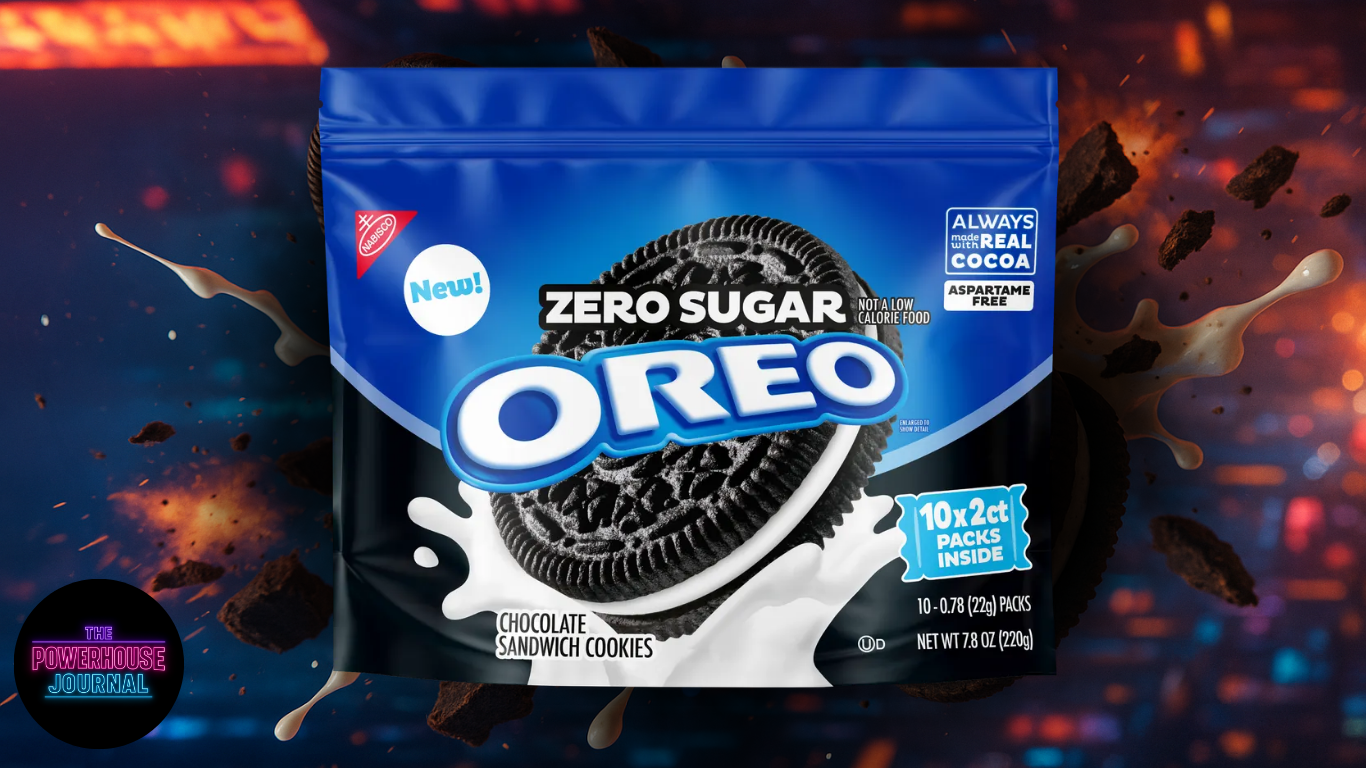
Oreo just announced the release of Zero Sugar Oreos, launching January 2026 in both Original and Double Stuf, and predictably the internet did what it always does:
half the people crowned it a health breakthrough, the other half called it poison.
Neither reaction is correct.
So let’s slow this down and actually talk about what matters — because this product is a perfect example of how nutrition conversations get derailed by ingredient fear instead of basic physiology.
First, the Facts (Because Context Matters)
Here’s what we know from the labels:
Regular Oreos
Serving size: 3 cookies
Calories: 160
Sugar: 14g (13g added)
Zero Sugar Oreos
Serving size: 2 cookies
Calories: 90
Sugar: 0g
Sweeteners: maltitol, polydextrose, sucralose, acesulfame potassium, sorbitol
No aspartame (whatever…)
Packaged as 10 individual 2-cookie packs
Right away, we need to clear up the first point of confusion.
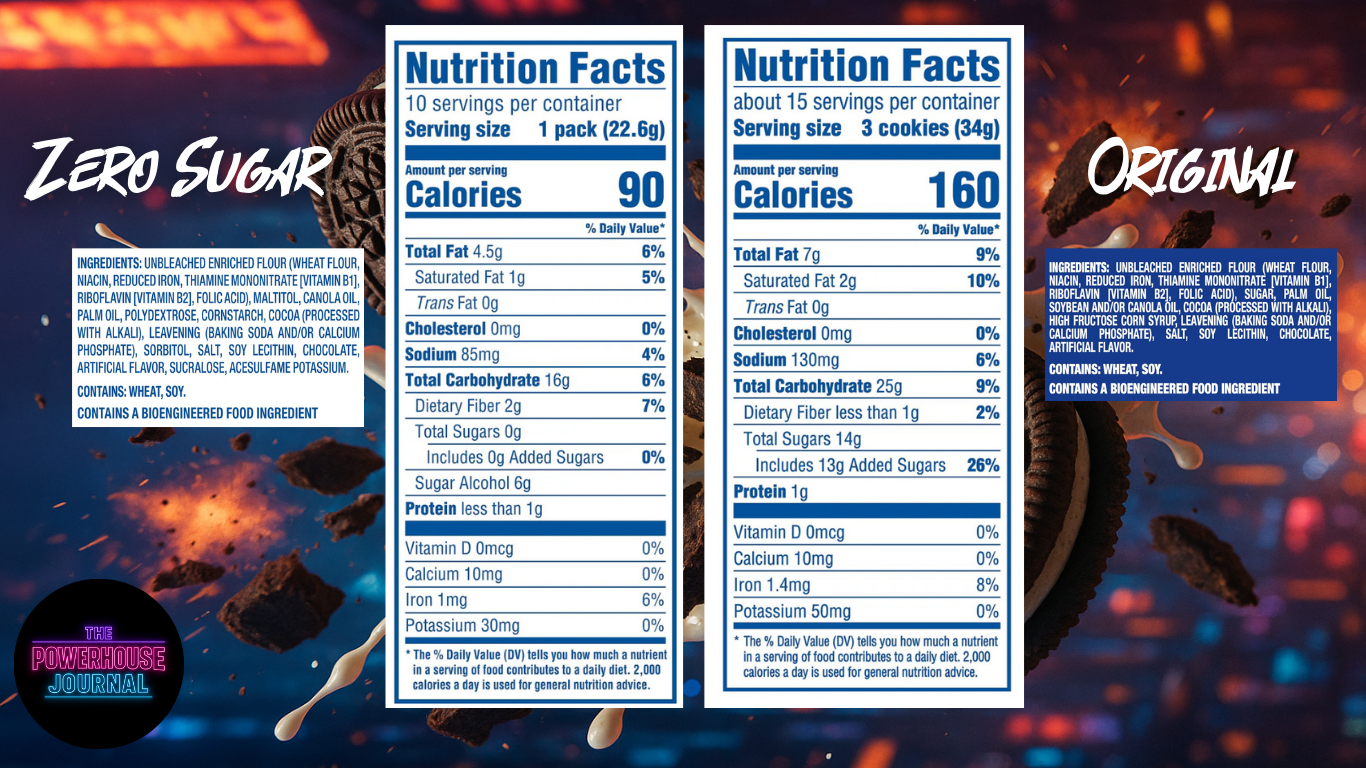
These are not equal servings.
A lot of the “healthier” perception comes from the smaller serving size, not from a dramatic nutritional transformation.
If you scale Zero Sugar Oreos to 3 cookies, you’re looking at roughly 135–140 calories.
Yes — that’s lower.
No — it’s not a metabolic miracle.
This isn’t a diet hack. It’s portion math.
The Sweeteners: What Actually Deserves Attention
Zero Sugar Oreos use a blend of sweeteners, but the one that matters most is maltitol.
Maltitol is a sugar alcohol. It’s commonly used because it tastes closer to real sugar than many alternatives and provides structure in baked goods.
But here’s where people get it wrong:
Maltitol is not non-glycemic
It can raise blood sugar and insulin
It is not equivalent to erythritol or allulose
It is well known for causing GI distress when overconsumed
This is why calling these cookies “diabetic-friendly” or “keto” is inaccurate.
They may be lower sugar, but they are not metabolically neutral.
And no — subtracting fiber and sugar alcohols to get “net carbs” does not change how your body processes food unless you are following a medically supervised protocol.
Marketing math is not physiology.
Here’s the Part Everyone Misses
This conversation keeps centering on sugar — and that’s the problem.
Sugar was never the real issue.
The issue has always been overconsumption of calories over time.
A person doesn’t gain fat because they ate sugar once.
They gain fat because they consistently consume more energy than their body needs.
You can do that with:
Sugar
Sugar-free products
“Healthy” snacks
Protein bars
Zero-calorie-sweetened foods eaten in excess
The body does not care about moral labels.
It responds to energy balance.
This is why people can eat “clean,” avoid sugar, avoid processed foods — and still not lose fat.
Calories still count.
Volume still matters.
Habits still matter.
What Oreo Actually Did Well here
The most intelligent part of this product is not the sweetener blend.
It’s the packaging.
Ten individual 2-cookie packs is a massive shift from the traditional sleeve design that encourages mindless eating.
For many people, the real issue was never the cookie — it was the fact that “I’ll just have one” turned into half a row without realizing it.
Portion control is often more powerful than ingredient swaps.
So Are Zero Sugar Oreos “Better”?
The honest answer:
They’re different. Not superior. Not dangerous. Just different.
Potential benefits:
No sugar
Slightly lower calories per controlled serving
Built-in portion awareness
Real trade-offs:
Maltitol can impact blood sugar
GI tolerance varies wildly
Still processed
Still easy to overeat if ignored
Still contributes calories
For some people, these will fit better.
For others, two regular Oreos eaten intentionally may actually feel and digest better.
Neither choice is morally superior.
The Powerhouse Take
Zero Sugar Oreos aren’t a solution — and they’re not a problem.
They’re a reminder of something much more important:
You don’t need to fear sugar.
You need to understand intake.
Progress doesn’t come from chasing “cleaner” labels.
It comes from consistent habits, awareness, and honesty about how much you’re actually consuming.
If you enjoy these and they help you stay within your calorie goals — great.
If you don’t tolerate them well — also great. Choose something else.
Nutrition isn’t about purity.
It’s about alignment with your goals, your body, and your real life.
That’s the conversation we should be having.